Showing posts with label Virginia. Show all posts

Monday, October 01, 2007

VIRGINIA HAS ALWAYS BEEN FOR LOVERS, BUT WE'RE NOT SUPPOSED TO TALK ABOUT THAT:
Thomas Jefferson, Sally Hemings...
And The Bed That Made America

CHARLOTTESVILLE, Va. (ZP) -- The last time I stood inside of Thomas Jefferson's bedchamber, George H. W. Bush occupied the White House, Saddam Hussein had just been driven from Kuwait, and the Soviet Union was in the midst of its nervous breakdown.

Fall. Nineteen-Hundred and Ninety-One.

I'd just started eighth grade, all of 13 and already a troublemaker of some notoriety, and my Civics class was visiting the Founding Father's home as part of field trip.

And during that tour of Monticello, as I stood next to the bed of one of the greatest minds of the 18th century.

Principle author of the Declaration of Independence and the Virginia Statute of Religious Freedom. Founder of the University of Virginia. Third President of the United States.

Yeah, yeah, yeah. Fascinating stuff, really.

But I had a mission back in 1991.

I just had to, well, touch IT.

On this visit, while the tour guide rambled on about architecture and agriculture and life on the man's plantation, I just had to touch IT again.

Wait... IT?

* * * *

IT.

IT
, as in, Thomas Jefferson's alcove bed.

The place where not only Jefferson slept, but...

... Probably, Sally Hemings as well.

* * * *

Everything's in that one bedchamber, unspoken and buried beneath every nail and plank, just about every aspect of the social fuckedupness that was Virginia pop culture, from 1607 through 1865. The three-fifths of a man horseshit, chattel slavery realities and plantation pipe dreams, the myths of racial superiority, inferiority, and eugenics, the utter insanity of the human concept of race itself.

And Jefferson's bed, well, represents the most controversial interracial relationship in U.S. history.

Hemings and Jefferson probably stole precious moments in that bed, clandestine kisses and witching-hour moments of foreplay, caught up in the blatant hypocrisy of Colonial and Post-Colonial North America.

IT's quite comfortable, actually.

Hell, I'd hook up with Tommy Boy in the sucker. Homeboy really knew how to design a built-in bed.

* * * *

I waited for my moment this time, waited for the tour guide to be distracted by some old lady from Madison, Wisconsin, or Peoria, Illinois, or Birmingham, England...

And then, when the time came, I reached right over the rope barricade, pushed my fist down into the replica down mattress, left my own wrinkles in the very fabric of American history.

Fall. The Year of Our Lord, Twenty-Hundred and Seven.

At 29, I'm only slightly less of a troublemaker.

* * * *

Back in 1991, I'd pestered a poor tour guide about Hemings and Jefferson's rumored sexual relationship, about how the man behind the All Men are Created Equal Doctrine may have Founding Fathered as many as six children with a woman that he owned as property.

My overzealous questioning drew the scorn of one of the teachers escorting the field trip. I was warned, threatened with a detention slip, if I didn't simmer down.

I was such a rebellious arrogant brat - I told the teacher, in advance, that I was going to do it, going to sit right on the edge of the bed of Thomas Jefferson. That act, the educator warned me, would lead to both a phone call to my parents AND in-school suspension.

So when we entered the bedchamber during our class tour, I waited for the guide to be distracted, waited for the teacher in question to look right at me, and plopped my 13-year-old ass down on the bed where one of the greatest minds of the 18th century once slept...

... And maybe his mistress, occasionally, too.

One whole day. My act of civil disobedience earned me one whole day in detention.

Technically, it earned me three days of in-school suspension, but I skipped class for the other two, forged a note from my high school's disciplinary official regarding my satisfactory completion, and never served out my full sentence. The teacher never called my parents.

It was so worth it.

- # # # -

Friday, September 28, 2007

JOHNNY REB ONLY SINGS DIXIE FROM THE GRAVE:
The Confederate Dead Still Haunt Virginia's Capital, But Nobody in Richmond Seems to Notice

NOTE: This is the first of several posts intended for last week, but, well, rural Southside Virginia ain't exactly a Public Wi-Fi kinda place. - Jason


RICHMOND, Va. (ZP) -- Two women turned the corner of 12th Street, began heading east down Clay Street, towards the Medical College of Virginia Hospital parking garage.

The pair stopped at the front steps of the White House of the Confederacy, dug into their respective purses for cell phones and cigarettes, chatting away a beautiful Downtown afternoon.

One woman was an African immigrant, her outfit placing her country of origin somewhere along the Atlantic coast between Senegal and Ghana. Her accent was thick and pronounced as she spoke, English clearly her second or third language.

The other, a light-skinned black woman, clearly a lifelong U.S. citizen with her thick Piedmont accent, had with her a little girl, a small child who looked exactly like Norman Rockwell's famous portrait of Ruby Bridges, the little girl who U.S. Marshals had to escort to her first day of integrated Kindergarten in 1960s New Orleans.

The two women briskly laughed and bantered and swapped stories. I could hear every high-pitched exclamation of joy and shock, every sigh of the workday grind.

I leaned against an anchor of the C.S.S. Virginia, the famous long-gone ironclad, an outdoor exhibit at the entrance to the Museum of the Confederacy, less than 30 feet away.

I lit another cigarette and listened as the pair's chatter welcomed the afternoon rush hour.

* * * *

I looked back at the museum's entrance, blowing smoke from my nose as the sounds of cityscape filled my brain with all sorts of pleasant memories.

My grandmother and sister were still perched on a park bench near the memorial garden, my father was still inside wandering the exhibits, and my cousin from Louisiana was snapping tourist-perfect pictures of just about everything in sight.

I looked back down Clay Street, back towards the heart of the onetime Capital City of the Confederate States of America.

The rest of the 21st century had already joined the women on the sidewalks and streets, and the rogue government's executive mansion melted into a sea of today's Richmonders.

A group of Mexican men, construction workers, strolled the workingman's stroll back towards the parking garage, lunch boxes swaying at the ends of tired brown arms. A group of Korean and Chinese medical students hurried towards North 10th Street, towards their momentary freedom from residencies and hospital rounds.

And no one seemed to pay any mind to the fact that they walked beneath the long shadow cast by a relic of the Lost Cause.

Only the tourists. And the pigeons.

* * * *

A white man in a suit strolled down the sidewalk, a black woman at his side. The woman put her hand in his back pocket as he gabbed away into his wireless Bluetooth headset. She grinned and tugged him towards a food vendor's cart just outside the Confederate White House, kissed him on the cheek beneath the windows of Jefferson Davis's former study.

And the man wrapped his arm around the woman's waist as he ended his call, returned her kiss, and bought a couple of hot dogs - just outside the room Abraham Lincoln is said to have used immediately after the city rejoined the United States in 1865.

It took more than a century after the Great Emancipator visited that building, a mere week before his assassination, for such a display of public affection to be decriminalized in the Commonwealth of Virginia.

And now, 40 years after the landmark Loving v. Virginia Supreme Court ruling, a black woman and white man can share an intimate moment on a bustling sidewalk, in plain view of immigrants and businessmen and doctors and tourists, people of every ethnicity.

What a strange sensation – to witness two people in love and to feel somehow patriotic, to feel as if the whole of Freedom can be sealed with a kiss.

* * * *

There are people who visit this town only to marvel at its statues of dead rebel soldiers, to visit its monuments to a lost war, to revel in only one part of the history of the American South. But it's surprising how easy it is to forget Richmond's naked now and future, the true legacy of the American Civil War.

The ghosts of the Confederacy don't speak with African or Asian or Mexican accents, don't embrace while buying hot dogs, or even lean against the old scuttled anchors of sunken warships. Johnny Reb died a long time ago, his bastard son Jim Crow put down like a rabid dog in the streets. They rule nothing but the memories on the nostalgic.

But the living sing Richmond and Virginia electric, every day in the naked now, somewhere along the stony banks of the James River.

- # # # -

Wednesday, May 23, 2007

STEEL OF THE SOUTH:
More Scary Virginia Stories to Blog in the Dark...

OXFORD, Ohio (ZP) -- Recently, while stuck on bed rest, I had the opportunity to get some pleasure reading done. At one point, I unearthed my old high school yearbooks.

Flipping through the vulgar comments and past pictures of people I've long forgotten actually brought back some interesting memories.


I found a photograph stuck between a few pages, a photograph of this frightening brute of a kid. He had a sneer on his face that could kill weaker men, eyes full of all sorts of illicit substances, hair parted straight down the middle, bandages covering gashes over his eye and across his nose.

Man, I'd almost forgotten what a hoodlum I was when I was 17.
Scared the shit out of me.

And some people wonder why I consider myself fortunate to have survived high school. But I think I turned out just fine. Wouldn't change a thing.

- Jason

* * * *

The machete was brand new, fresh from the Rose's five-and-dime, plastic shrink wrap dangling from the handle.

I heard one of the school's vice-principals shout into his two-way radio as he chased after “Muhammad,” ordering the school's receptionist tell the sheriff's deputies that the “suspect” was armed and dangerous.

Muhammad was normally a peaceful kid, a Black Muslim whose parents had sent him down to Farmville to live with his grandmother. Muhammad had spent his early childhood being instructed in the ways of the Five Percent Nation.

Though a man of peace, who had many friends of many races, he readily admitted to distrusting white people, to being convinced that the FBI had killed Brother Malcolm and Dr. King, to believing that the federal government was pushing crack in housing projects across America.

Muhammad had been suspended from school for fighting with a white kid earlier that day. The white kid had received a lighter sentence. So Muhammad was sent home, and the white kid was sent to In-School Suspension.

Muhammad had obviously gone shopping for some very mean-looking hardware, purchasing a tool to extract his pound of cracker flesh for what he apparently viewed as a racist conspiracy. As he ran past me, after the white kid who'd passed me only a few seconds earlier, I noticed his eyes were aflame with that lust, that murderous thousand-yard stare of a man consumed by his own hatred.

I learned a long time ago that one does not step in the way of a man wielding a machete, even a normally peaceful man. Machetes do not leave pretty wounds and often sever limbs.

Mr. S., a chisel-faced man in his late fifties, was the senior disciplinary administrator of the school district. He'd survived the 'Nam; he once claimed that maintaining discipline in a rural Virginia high school was nothing compared to dealing with Charlie. But despite his reputation as a harsh man, he was also known to be fair and once, according to legend, had even laughed.

Mr. S. plowed through the throngs of 13-18 year-old kids who clogged the sidewalk as they waited for their afternoon buses. He pushed students to the ground as he ran, hollering ahead for students to get out of his way or risk being run down. Some moved out of the vice-principal's path; most did not.

“Muhammad” apparently did catch up with the white kid, who'd run to the school office for shelter. The principal convinced the Five Percenter, the normally peaceful kid with many friends of many races, to put down his weapon before he ended up doing something he'd later regret.

By the time the county mounties arrived, the incident had been resolved. And "Muhammad" went to jail, never to return as a student.

Later that week, the school yearbooks were distributed to those who'd paid for them. I remember wishing that Muhammad had waited to go crazy, wishing that he'd waited until after the school year ended, so I could've gotten him to sign my freshman yearbook.

After all, he was a peaceful man, most of the time, with many friends of many different races.

* * * *

I don't know what inspired me that night.

Maybe I'd seen too many gang-related films - movies about South Central Los Angeles, Miami drug lords and New York crime kingpins were all the rage in the mid-1990s. Or maybe it was the gangsta rap or the aggressive punk music, the stuff I started to listen to the moment I hit puberty.

For whatever reason, I was inspired, after helping a "Max" jump a guy behind the Food Lion, to piss in a kid's face as he lay on the ground.

We used to call this sort of juvenile code enforcement schoolin' a motherfucker. And, as my friend put it so eloquently that night, if this motherfucker wants to steal shit, he needs to be taken to motherfuckin' school.

Nobody else wanted to help this friend of mine out. None of our mutual friends, who all talked a good game, stepped up to get his back. They were all conveniently busy, had baseball practice or dates. So “Max” and I sat alone in his beat-up yellow tank of a car for two hours, drinking forty after forty of Colt 45 and waiting for this stupid kid to leave a shopping center cineplex.

The poor bastard didn't even see it coming. Walked right out towards his car as if he owned the world.

“Max” did most of the work. It was his stolen property, his lost income. The only thing I did was hit the kid from the back while Max informed him of the charges against him, of why this milder sentence of the Court of Street Justice was better than the alternative.

As the kid lay on the ground, squirming and begging, the 160 ounces of malt liquor filling my bladder suddenly demanded a prompt exit.

It was nothing personal, really. I just had to take a leak.

As Max reminded me afterwards, when I felt guilty about it, that kid probably would've done the same to me if he'd had the chance. And if it'd been other guys jumping him, less civil individuals from Church Hill or Hampton Roads or D.C., then he probably would've endured much, much worse.

An eye for an eye, a piss for a piss.

* * * *

That motherfucker had a .22...

When he first pulled it from the front of his boxers and started waving it around, screaming about how “hard” he was, most people just laughed. And when he fired into the air, bobbing his head up and down, one hand holding up those baggy jeans and the other holding a weapon, people just stood there and stared.

Here is this 16-year-old, skinny-ass white dude, who everybody knew was crazy, save for the court-appointed dumbass who'd let him off probation early. Here's this Crazy-Ass Peckerwood, waving a gun around in a parking lot at two in the morning.

And the only thing anyone could do was laugh, then stare in amazement.

If this kid's parents hadn't been wealthy socialites, I'm fairly certain he wouldn't have been set loose by the correctional system. If he'd been poor, or a minority, or poor and a minority, he would've been rotting in a juvenile prison somewhere.

But because he came from a good family, one where the poor little thing's psychosis was easily blamed on a desire to fit in and his parents' divorce, he was set free to go all apeshit in the middle of the night without so much as an ankle bracelet.

When Mr. Crazy-Ass Peckerwood started beating that tiny handgun upon his tiny chest, screaming about how he was going to bus' a cap on someone if he did'n get respec', people finally began to back away from the scene.

The cops, surely, had been called, and nobody wanted to be around an armed nutcase when the cops showed up. As I ducked down to climb into the driver's seat of the Maroon Doom, my prize Dodge Shadow, the idiot started firing again. But this time, he wasn't firing into the air.

I remember being shoved from behind, with a friendly hand on the back of my neck. My chin caught the shifter and my shin caught the door frame as my body fell into the car. My first reaction was to start laughing. Earlier that night I'd watched a documentary on the Reagan assassination attempt - the idea that my friends would choose to play Secret Service agents to a would-be Hillbilly Hinckley was too absurd not to laugh.

I rolled over and sat up in the driver's seat, still laughing. A hand reached up from the backseat and smacked me upside my skull, with voices screaming for me to drive, motherfucker, drive.

As I started the engine and shifted down into second gear, I looked over at the crazy motherfucker. He was pointing that little pop-gun .22 towards the Maroon Doom, firing away. From the back seat, people were arguing about someone needing to see a doctor, about me needing to drive to the emergency room.

As I drove, the person who'd been grazed climbed into the passenger seat next to me, showed me what looked like a long cigarette burn, and said that, no, he didn't need to go to a doctor – our other friends were just being pussies.

He'd been shot before, so I took his word for it. He smiled and pointed out that getting grazed was a much better alternative than having me get shot in the face.

I laughed at first. And then it hit me like a cinderblock to the chin.

I spent the next few days barely sober and rarely narcotic-free, afraid to face the nature of my own mortality, the fact that, yes, a .22 pistol is a small gun that can still, if someone's shooting at you, end your life if its rounds hit you just right.

... And he just tried to fucking kill me.

- # # # -

Friday, May 18, 2007

THE LUNENBURG COUNTY HOODOO HUNT OF '92:
A Southern Tale of Witchcraft, Ghosts, and Other Human Terrors

"Pete" and I rode out into the dusk on our bicycles. It was the summer of 1992, along the Lunenburg/Prince Edward county line, a few miles east of the Green Bay, Virginia, post office.

We'd heard the stories for years, the tall tales of old white women, the legendary yarns of tobacco farmers and soybean sages. And we'd been warned by our elders, too, to never look for that old shack, because anyone who trespassed there would be doomed.

According to Pete's grandmother, the shack, whatever remained of it, was cursed - decent white folk, as she put it, never went a-looking for that nig'ra witch's place.

Despite the warnings, Pete and I had decided, in the midst of one of the hottest summers of our lives, to find out the truth. We sat out to locate the mythical witch's cabin, to investigate the rumors and legends for ourselves.

* * * *

Older people in that area knew the legend, but all of those who told it to me are now dead. I don't know if the story is still told in the 2000s, in this modern era, around campfires and at family cookouts. I suspect that those who are now the age I was in 1992 probably have never heard the tale.

This may well be the only written account of the legend of the Washerwoman Shack.

According to the versions I remember, the shack once belonged to a black laundress, a former slave. Her name has been lost to history, but she was said to have been a witch, a practitioner of the lost arcane art known throughout the South as Hoodoo. Rumor had it that her death was the result of arson, that several white teenagers had trapped her in her own home and then set the place ablaze - punishment for being an uppity nig'ra.

No historical record exists of the old midwife, or of the fire that supposedly killed her. That should shock no one reading this; the barbaric history of the Jim Crow South is full of convenient disappearances. Black people who were different from or educated beyond their white counterparts, especially in a region once known for its Klan-dominated government, tended to disappear, and people often left it at that.

To this day, in fact, there are still old white men alive throughout Dixie, family barbers and nice country doctors, kindly police officers and polite retired shopkeepers, who helped make people like the midwife disappear. And they will take their secrets to their graves as surely as they smile at church suppers and play poker down at the VFW, the face of one man or woman's unsung butcher simultaneously the face of someone's cherished grandfather or favorite teacher or beloved community leader.

With such hidden horrors of this mortal coil, throughout Virginia and the rest of the South, why would anyone be afraid of a dead woman's curse, a woman for whom there may be no record of her having ever lived in the first place?

* * * *

Pete and I didn't believe in witches, of course.

Sure, "Sara," Pete's neighbor, claimed to be a witch, a follower of something called Wicca. But she simply smoked a lot of pot, burned incense, and liked to dance around her mobile home naked, calling her acts sabbats. To us, witchcraft, at least the Caucasian version, was nothing more than a stoned redneck girl who collected dragon sculptures.

And curses? I believed in them, but, well, I'm part Cajun, with a great - grandmother who used to read my tea leaves on a regular basis. I still cross myself every time I pass a cemetery. Pete, however, did not. He was a Good Ol' Boy. He believed in the Holy Trinity of the Peckerwood - God, Guns, and the Rebel flag.

Pete and I had just celebrated our fourteenth birthdays. We were almost men at the dawn of the 21st century. We'd grown up with things like television, FM radio and VHS machines. We'd watched the Challenger explode a few years earlier, listened to Def Leppard and Winger and Warrant, and frequently shoplifted softcore porn from the local video store ...

* * * *

The Virginia dusk soaked us in sweat a few miles into our journey, so we stopped alongside Molasses Hill Road for a quick break. After carefully hiding our bikes in a patch of pokeberry, we did what many rural Southern teenagers do when there's a lack of adult supervision during the summer.

We had a pint of moonshine liberated from a local farmer's private stash. We had an ounce and a half of a certain illegal plant, rolled up in fresh cured tobacco leaves. And we had a backpack full of pimiento cheese sandwiches.

No great adventure, as a teenager, is ever devoid of a ceremonial meal. And witch hunting, in Southside Virgina, is hard work.

* * * *

We knew the legendary haunted ruins lay just off a timber road, somewhere along the county line. And by sundown, we'd found it.

The pine log structure was charred, held up only by the crumbling red clay that filled its joints. Inside, those same logs were found to be half-consumed by whatever fire had once raged through it. In what was left of the kitchen, a rusted iron kettle still hung in the back of a river stone fireplace - the walls around the hearth had collapsed long before we arrived. The remnants of two chairs and a table rested on the ground, partially buried in leaves. Firs and maples grew up from what had once been someone's well-worn dirt floor.

Pete and I decided to make camp for the night, right in the middle of our Virginia version of El Dorado, our great archaeological find in the Lunenburg wilderness. In the morning, we'd return home to tell of our expedition, to boast to friends on the phone, and to, well, begin planning new ways to use the site as a party spot for our forthcoming high school careers.

The way I remember it, I built the fire, using some of the chimney's collapsed stones to build a decent pit. We needed light to explore by, and, like the young juvenile delinquents we were, we'd forgotten to bring more than one flashlight. For some reason, the air inside seemed cold and damp despite the lack of a roof, as if the southern summer stopped at the walls.

Pete had brought his father's .45 and a box of shells; he spent most of the time killing off the blunt we'd started earlier and shooting at what had once been the outhouse a few yards past the "back door." I tossed him the old kettle at one point, figuring he could at least practice his aim on something smaller than an outdoor shitbox.

* * * *

Shadows cast by fires can play tricks on a person, especially at night. Moonshine, of course, doesn't help matters much.

Pete and I explored the ruins carefully. There were only three rooms to the place - a front room, the kitchen in the back, and what we guessed had at one time served as a bedroom. In every room, there were remnants of life buried in the leaves underfoot. Old tin cans, broken lanterns, and even what looked to the remains of a bed frame. Everything bore the signs of one hell of a house fire.

And then we found the door.

* * * *

There were no interior doors in the ruins. And the back door into the kitchen was long gone. The four windows, which probably hadn't held glass anyway, were nothing more than gaping holes into the darkness.

But ten feet away from the front room entrance, just past the charred remains of what had once been a porch, we found a z-frame door, propped against an old walnut tree. The hinges looked as if they'd been blown apart at the pin, as if the pin itself had exploded. The door looked as if it had been carefully placed there, like a tombstone in some old cemetery.

Pete, in his eagerness, wanted to drag the door inside, near the fire, so it could be inspected. He grabbed both sides and lifted the sucker while I held the flashlight. When he turned around, the backside was exposed for probably the first time since it had been placed...

I remember the chill that shot up my spine, the numbness of shock and childish fear that enveloped my body. There were bones on the back of the door. Not human bones but animal, firmly attached with wires, dangling in the light. There were whitetail antlers and groundhog skulls, petrified bird feet bound together. There were strings of bottle tops, too, interlaced into long bead ropes with animal teeth.

Pete dropped the door, its rotten timber splitting in half at the cross brace. We ran back into the house, swearing as we ran, huddled with our backs to the fire. Suddenly, the typical nighttime noise of the woods, the crickets and owls and whippoorwills, was amplified against the night.

As illogical, as irrational, as it sounds to write now, in the 21st century, I'm quite sure there was something out there watching us, something that we'd disturbed. And I remember feeling as if we were squatting in that something's ruined house.

* * * *

Pete and I sat in silence for almost four hours, afraid of the dark for the first time since we'd been little kids, terrified to make a sound without so much as a blanket to cover our faces.

And then, without warning, Pete reached into the backpack, withdrew his dad's pistol, and started firing wildly into the night. I tried to stop him, but the weed-induced paranoia had gotten the best of his fears. Ghosts, even if they do really exist, have never been known to be afraid of a gunshot.

Pete kept pulling the trigger until he'd emptied the clip. And I started to yell, to scream. I felt it in my throat, working its way up from my lungs. But my scream died somewhere between my teeth and my ribcage, died mute and still in captivity.

There was nothing but silence. Not a sound coming from the darkness.

Suddenly, from above us, from the back of the chimney, came a shrill scream like none I've ever heard. A large black bird, probably a buzzard, tore off into the night sky. I saw nothing but a looming silhouette against the light from the fire, felt nothing but the breeze of its wings.

At least, as an adult, I've convinced myself that it was simply a buzzard.

* * * *

The South is full of stories about black people who mysteriously disappeared, of old Hoodoo women who may or may not have met their ends at the hands of a lynch mob or group of white supremacists. While I'm convinced that whoever lived in that house probably practiced some sort of folk medicine, there will never be a way to prove or disprove the tall tales I'd heard.

Every once and a while, I'll have a nightmare about that ruined house, about that door. In the parts that I remember from those dreams, the door is almost always somehow alive, possessed by demons, the animal skulls and bird claws dancing with the strings of fangs and bottle caps.

And there's an old black woman there, too, my mind's interpretation of what she may have looked like, her white hair made of clouds and her body aflame, cursing those who killed her and crying out for justice.

And when I do dream those little dreams, I find myself hoping that I'm not cursed myself. I know, it's a silly thought. But one never knows what sinister powers exist in the World of the Supernatural.

A few days ago, I caught the smell of burnt pine drifting through my apartment windows here in Oxford Fucking Ohio, the same scent I smelled back in those Lunenburg ruins almost two decades ago. I flashed back to that night as I lay in bed. And I felt that strange chill upon me once more, that terrifying cold of the unknown.

I wonder now, as I did a few nights ago, what it would feel like to simply disappear, to become nothing more than a phantom in a tall tale?

I wonder what those surviving old white men dream about, the ones who will go to their graves knowing the true fate of African-Americans like that phantom hoodoo woman? What haunts them as they lay in bed? If there is indeed a Devil, the Judeo-Christian fallen angel of lore, I wonder what flesh-tearing things he has in store for them in his infernal pits of brimstone?

I wonder what terrifies those men? What torments those still alive who lynched innocent men across America, or burned them alive in their homes? Did their victims forgive from their disappearing graves? Or do the Undead rise like a mojo hand, returning to this world to serve as brown-skinned swords of a vengeful God?

Maybe, just maybe, that property really was cursed. And maybe we disturbed the restless spirit of a murdered black woman that night. And maybe, just maybe, Pete's gunshots were merely a reminder to her that the time had come for her to depart this world for a better, more Hoodoo-friendly afterlife.

Maybe we were spared that night because we were simply drunk, stoned children in search of adventure, not the old white men who once roamed Virginia nights in pointed white hoods?

The realm of the supernatural, if it does exist, is one a 13 year-old Virginia boy couldn't explain in 1992. And that kid, as a man, years removed, can't explain it, either.

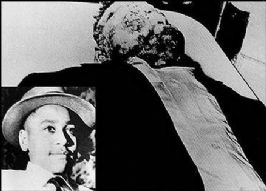
Some of the things that haunt the sons and daughters of the American South, as real and as vivid as Emmett Till's bloated corpse, as haunting as Medgar Evers and the other ghosts of Mississippi, are much more terrifying than a simple ghost story could ever be.

- # # # -