"Men at some time are masters of their fates. The fault, dear Brutus, is not in our stars, but in ourselves, that we are underlings."- Cassius, from Julius Caesar (I.ii.140–142)
My knees buckled for a moment, as if his shame suddenly became mine as the artifact changed hands for the first time since the 1970s. That weight pulled me down onto his couch as the strong desire to vomit almost overtook me.
If I hadn't been sitting on that couch, the amount of smug, smiling hate in those mugshots would've eaten me alive.
Even years later, I can still feel that old widower's couch devouring me in its plushness, comforting my body so my senses could absorb it all.
* * * *
Some of the most prominent citizens from my own corner of Virginia stared up from behind the glass, their younger 1950s selves captured forever in white robes, my memories of them as simply nice old men shattered like a ceramic Jesus in hell.
One of the men used to cut my hair - I have many fond memories of my time in his barber's chair. Another face, that of a prominent retailer, a friend to not only my family but of many, glowed with his beautiful, Tobacco Country smile - a shopkeeper by day, and a Grand Dragon by night.
The most exclusive of fraternities, one of White Protestant Male paranoia, from the end of the Second World War through the end of Vietnam, residents of counties with such regal, Old World names: Prince Edward, Charlotte, Lunenburg, Cumberland. They hailed from towns like Farmville and Keysville and Burkeville, from Victoria and Kenbridge and Darlington Heights.
I knew all but four of them, at some point in my life, personally. The four I didn't know had all died before I was even born. But the record of their time in the Ku Klux Klan had been trapped in that old man's closet, in that frame.
Up until that point, several years ago, they had all been men I respected. The grandparents of classmates and friends, men who'd mentored my mother through her years as a business owner in the area, men who gave me candy and free bottles of soda in their shops, told wonderful stories and who entertained me before I could even walk.
And for all of the anxiety and terrifying expectation...
I wasn't even shocked.
* * * *
The most dangerous creation of any society is the man who has nothing to lose.- James Baldwin
The elderly man finally broke down as we went through this one box, one full of photographs and, of all things, a ledger.
This one branch of Virginia's Klan, during the 1950s and 1960s, operated like other popular fraternal organizations, like the Kiwanis or the Moose or the Shriners. Members paid dues, paid for their robes and hoods. They even contributed money for timber and fuel oil to hold their rituals.
And someone, probably the local chapter's Klabee, kept very detailed records.
More than 50 pages of writing in that one ledger, filled with addresses and old switchboard phone extensions - and, of course, names.
Names.
How many of these men knew that almost a half-century later, society would change so drastically? Did they know how wrong they were? Did they realize, like my old collector, that society would not remember them for working to save the South but as an instrument of terror, a symbol of intolerance and fear?
* * * *
It was the snapshots in that box, however, that offered real insight into the true dynamic that drove racism and prejudice in the South.
The origins of segregation and slavery lie not in the color of skin but in the gluttonous insanity of unchecked capitalism, a pursuit of wealth and power devoid of compassion, reason, and responsibility. The quest for money, guns, and land gave rise to the social construct of race in the New World, just as surely as the monarchist traditions of Europe gave rise to Stalinism, Fascism, and Nazism in the Old.
It was easy for slave owners to justify oppression as just another cost of doing business, for example. And after slavery, it was equally easy for white landowners to justify the system of sharecropping - a system propped up by Jim Crow policies designed to keep not only former slaves unable to escape agrarian servitude, but the descendants of the white non-landowning classes as well.
While the ledger detailed the business transactions of an organization, the basic bookkeeping that goes into any exchange of capital for privilege and property, the black-and-white images testified to the corrupting nature of the quest for profit.
One series of prints, banded together with an event program and several anti-integration pamphlets, spoke volumes about the true greedy, childish face of institutionalized racism:
The event, sponsored by a supposedly less-offensive white citizen's group dedicated to what in Virginia was known as the Massive Resistance Movement , touted the evening's keynote speech, about the dangers of integration to certain businesses and communities.
The speaker that night back in the 1950s was not George Wallace, or Gov. Byrd, or some other blowhard Southern Segregationist politician - the keynote was delivered, instead, by a prominent Negro leader speaking, supposedly, on behalf of concerned colored business owners.
And in the photographs, I beheld an interesting rider upon a very different pale horse - a black community leader and racial separatist, preaching to a Caucasian choir, with the Confederate colors flying above him. In some of the prints, he posed with old Daughters of the Confederacy ladies and with local football heroes from the all-white public high school.
And he posed with some of those same Klansmen, too, shook their hands and smiled beneath the ol' Stars and Bars. Sure, the Klan hadn't shown up in robes and hoods. There wasn't a flaming cross anywhere to be found. After all, who would want to offend a business partner?
And, I remember the old man explaining, many white folks had no problem with a Negro leader who blamed the social disturbances and protests of the era on what they saw as the real threat to America - the Northern pinkos and godless Muslims, the flashy Hollywood communists, and, of course, the Jews.
And again, nothing shocking. Does anyone really think there were no black men who supported, who prospered under the laws of the Old South? And that those same men never did business with white supremacists?
Makes perfect sense, actually, in a time when the whole of society was based on a flawed separate-but-equal system, including the economics. The elimination of segregated facilities and services signaled the death-knell for race-based businesses, both black and white.
Who, at the dawn of the dreaded Big Box Stores, would want to keep paying for the right to shop free of other races, for a Whites Only section, would continue to pay extra for it, as competition grew? And did anyone think that black folk really wanted to pay more for a dozen oranges at the Colored grocery than at one of those new-fangled, integrated supermarkets?
* * * *
It took five years' worth of correspondence to get the old man to even discuss the his activities, much less admit that he'd been a member of an organization that once corrupted the minds of many decent folks, a blasted society that fed on its members' fear of change as much as it fed upon the fear of the outside world.
At one point, it was an obsession - to expose something called the truth, the righteous concept of social justice driven by a personal need, a self-righteousness more akin to that of a lynch mob than to anything else. I'd planned a book, done the library research, studied my prey like a scholarly assassin.
I needed dirt to throw upon the graves of my enemies, the ghosts of the Old South. I didn't, at the time, care who I hurt. Hurt was, at the time, just what I intended to cause, through my quest to expose the truth. I'd made the mistake of so many, those who mistake arrogance for social justice - I'd passed sentence well before I'd judged the crime.
Though the mid-20th century Ku Klux Klan in Southside Virginia was abhorrent, it never was the violent terror that plagued the American Deep South. Sure, there were cross-burnings, and hateful speeches, and even acts of intimidation. But for the most part, history seems to record that its leaders failed to convince the majority of white folks in the area that their black neighbors were somehow deserving of violence. It wasn't the dreaded midnight monster of the 1800s or early 1900s. And, by most accounts, it was nowhere near as insane as the current White Pride movements.
Even a clergyman, a leader at a historically black church and veteran of the Civil Rights Movement I'd interviewed early on in my pursuit of truth, back when I was still in high school, wondered why a white boy would want to dig up such skeletons.
It took me watching an old man cry over his sins, the sins that terrified him as he prepared to meet his Creator, to understand that my quest to expose the truth looked a whole hell of a lot like the sort of insanity groups like the Klan generate.
What right does anyone have to sacrifice the future in order to preserve the past?
* * * *
Come to hate hypocrisy and the evil thought; for it is the thought that gives birth to hypocrisy; but hypocrisy is far from truth.I asked the curator of the Collection of the Damned why he'd left the Klan, why his incarnation had disappeared into barely an urban legend, a silenced joke without a punchline.- Christ, according to The Apocryphon of James
[Jung Codex, Nag Hammadi Library]
It was, strangely enough, Martin Luther King, Jr. Not the man, or the minister, or even the activist.
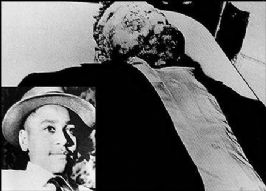
Dr. King's corpse changed him, changed his view of the Nig'ra people, saved him from becoming just another hateful man damned to a cultural hell of stagnation and bitterness.
You see, sometime after King's assassination, while the evening newscasters rattled off tributes and the newspapers ran stories of mourning and the demands for justice, the old man realized something that probably changed a lot of men like him.
King was a Baptist like the curator, a Southerner like the curator. King had won the Nobel Peace Prize, had preached nonviolence and tolerance, and had died at the hands of a coward. A coward who, well, held the same views the curator held, who'd sought to silence agitators and protect the Old South - who'd taken fear to the point of murder.
And while those Klan meetings often began with prayers to God for guidance, nobody ever brought up that hating thy neighbor was, indeed, a sin, that murder was a sin.
The old man told me that it took days for him to remember what that sort of propaganda reminded him of. It kicked like a mule when he finally figured out the connection between his fraternity and the murder of a Nobel Prize winner and fellow Southern Baptist.
Europe.
He'd heard it in Europe, seen it as he'd marched across a continent towards the stronghold of a madman from Austria, witnessed what hate and murder really cost a man, a nation, a continent.
Adolf Hitler's not remembered for preserving Europe's traditions, either.
* * * *
I asked him what he intended to do with them after he'd confessed his sins, had asked for absolution in the form of the kind of anonymity that only a young man can grant a man close to death.
He didn't know.
But he did know that he didn't want his descendants to ever know and figured that the rest of his former knights probably wouldn't want their descendants to suffer for their sins, either. And that Negro leader? What price would his family pay?
Men, armed with such records, could blackmail, could drive others to murder others as James Earl Ray did, could seek not reconciliation but lustful, bloody revenge in the name of social justice. People are fallible, will punish whole generations for the sins of their ancestors, will reign destruction upon the brows of the countless innocent.
Let's be realistic here: People kill to acquire such records. And people will murder their own kin to bury it.
He offered me the records. I declined. I have no right to such power. And I had no right to risk the safety of my own Virginia kinfolk, either.
Information is, indeed, the most brutal form of power - and power can corrupt even a young man's promises to the old, corrupt his honor for things like money or some sense of self-importance.
I offered him a solution, however - a way to be free.
* * * *
I spent $40,000 on graduate school, learned the proper ways to select and preserve historical records, to digitize them and make them available for future generations.Sometimes, one just has to accept that teaching a man how to un-preserve the past means more to the future than any amount of academic argument.
On my last trip back to Virginia, prior to my most recent journey, I learned that that old man has moved on, has been called back to His Father, Who Art in Heaven.
I have no clue what happened to those records, but I have a good idea.
But I'm sure, wherever he is, that he got a chance to meet that fellow Baptist Southerner, to be free at last, free at last...
And my notes have conveniently disappeared, and that book will never be published. Names? Well, my memory isn't what it used to be...
* * * *
For to be free is not merely to cast off one's chains, but to live in a way that respects and enhances the freedom of others.It's the last week of September. I'm staring up at the new town hall in Farmville, the county seat of my home, built atop the ruins of a former strip mall that'd burned at the turn of the century.- Nelson Mandela
I'm sipping on a cup of Joe from one of several coffee shops that now dot Downtown. When I was in high school, there was nothing remotely resembling a coffee shop in downtown Farmville. And now, on this trip back, in 2007, there are independents and national chains to choose from - I even found a shop that serves the best fairly-traded, organic Ethiopian blend.
It's a Wednesday, midmorning, and Main Street's a happening place. For more than 20 years, for most of my childhood, it'd been the home to not progress but the economic abandonment that plagues many small Southern communities.
But now, today, a group of international undergrads from the local college, speaking what sounds like Mandarin, pass behind me, bags full of touristy items clamoring as loud as their conversation. A black police officer, up the street, pulls over a pick-up full of white teenagers for violating the town's new noise ordinance, for playing G-Unit tunes too loud in a business district. An artsy-looking woman, plain and strangely beautiful, snaps photographs in front of the county courthouse.
Art. It's everywhere in town these days. There's even a museum where an abandoned department store used to be, on the corner of Third and Main. Plasma screen TVs fill its plate-glass storefront, a multimedia exhibit that wouldn't have been possible in 1996, much less 1956.
I turn on my heels, head south on Main. I walk past the site of the old State Theatre, remembering that my parents took me to see Fox and the Hound at a corner that now serves as an outdoor park and amphitheater. New brick high-rise apartments cast shadows down on the real estate beneath them - they're built atop property that once contained a decrepit shopping center, a liquor store, and a parking lot full of midnight drug dealers.
I stop in front of a Baptist church that now rests beneath the shadows cast by the high-rises, a church founded by former slaves, right after the U.S. Civil War.
A sign proudly proclaims that Martin Luther King once spoke there, proudly proclaims its place in history.
Without that visit by that martyred Baptist peacemaker, I wouldn't exist. I wouldn't have graduated from what became one of the most successfully integrated public school systems in North America. I couldn't proudly proclaim that I come from a community that spawned the most successful, peaceful student protest in U.S. history, a small town on the outskirts of change so monumental that some of its records are stored in places like the Library of Congress.
And King did more than simply visit, than simply speak and inspire during his lifetime. Even in death, he helped drive another nail in the coffin of one of the darkest times in Prince Edward's history.
He liberated a Klansman from his hate.
And he freed a bit of my soul, too, in the process.
The importance of burying the past, sometimes, paves the way for a greater future.
- # # # -